



You should consider using an Employer of Record when you want to hire an employee in another country but do not have a legal entity there.
An EOR is particularly useful when speed, flexibility, and local employment support are more important than having your own permanent corporate structure. Common situations include testing a new market, hiring your first employees in a country, converting an international contractor into an employee, or building a regional team across several countries.
However, an EOR is not automatically the best option for every international hire. Your expected headcount, expansion timeline, employee responsibilities, tax exposure, and need for local operational control should also be considered.
What is Employer of Record?
An Employer of Record (EOR) is a third-party organization that legally employs workers on behalf of your company in another country.
While the EOR handles employment contracts, payroll, taxes, benefits, and local labor law compliance, you retain full control over the employee’s day-to-day tasks and performance.
In short: You manage the work, the EOR manages legal employment.
8 Situations When You Should Use an Employer of Record
There is no single scenario where EOR applies. Instead, it supports several common hiring and expansion challenges faced by global companies.
1. You Want to Hire in a Country Where You Have No Legal Entity
Companies generally need a registered local entity to hire employees directly in another country. Establishing one can require company registration, tax setup, corporate banking, payroll infrastructure, and ongoing legal and accounting support.
An EOR allows you to hire an employee without creating a local entity first. The EOR becomes the employee’s legal employer and manages the employment contract, payroll, statutory contributions, and local employment administration.
Your company continues to manage the employee’s responsibilities, goals, performance, and daily work.
2. You Are Testing a New Market
Setting up an entity before confirming market demand can create unnecessary cost and complexity.
An EOR allows you to hire local sales, marketing, customer success, or operations employees while evaluating the market. This can help your company understand customer demand, build local relationships, and assess expansion opportunities before committing to a permanent corporate presence.
For example, a Singapore company entering Indonesia could hire a local business development manager through an EOR to validate demand before establishing an Indonesian entity.
3. You Are Hiring Your First Few Employees in a Country
Creating and maintaining an entity may not be commercially practical when you only plan to hire one or several employees.
An EOR can provide the local employment structure needed to build an initial team without requiring your company to manage corporate registration, payroll systems, statutory reporting, and local human resources processes.
This approach can be useful for companies hiring their first regional salesperson, software engineer, customer support representative, or country manager.
As your workforce grows, you can reassess whether continuing with an EOR or establishing your own entity offers better long term value.
4. You Need to Hire Before Your Entity Is Ready
Even when your company has decided to establish an entity, completing the process can take time. Registration, banking, tax setup, payroll implementation, and local licences may need to be completed before employees can be hired directly.
An EOR can act as an interim employment structure, allowing employees to start work while your entity is being established.
Once the entity becomes operational, the employees may be transferred from the EOR to your company, subject to local employment requirements and an agreed transition process.
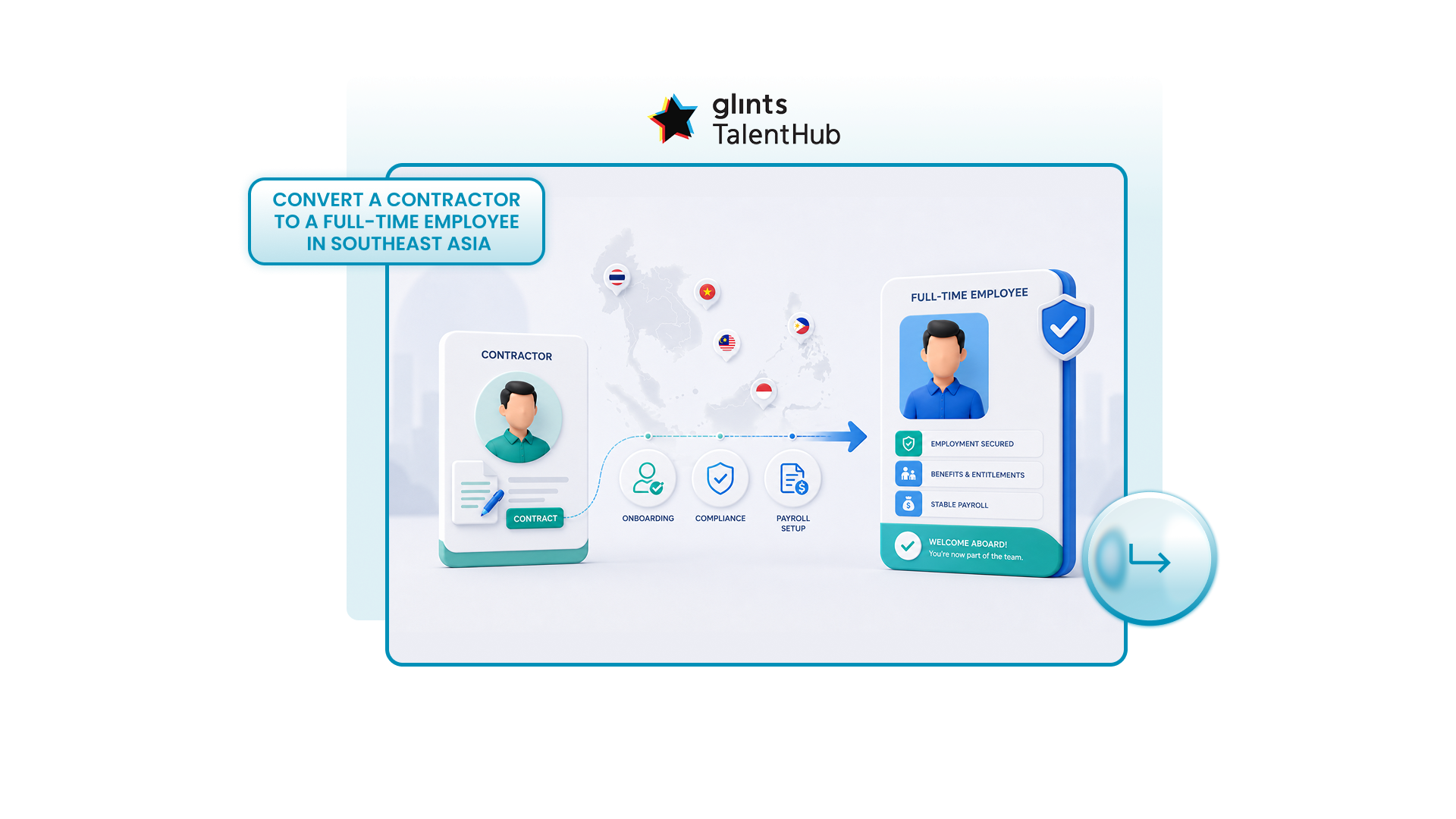
5. You Need to Convert an International Contractor Into an Employee
A contractor arrangement may no longer be suitable when an individual works regular hours, reports to company managers, performs an ongoing role, or depends mainly on one company for income.
These working conditions may resemble employment, even when the agreement describes the person as an independent contractor.
An EOR can help convert the contractor into an employee without requiring your company to establish a local entity. This gives the worker access to a locally compliant employment contract, payroll, statutory benefits, and employment protections while reducing worker classification risk for the company.
6. You Want to Retain an Employee Who Is Relocating
An existing employee may decide to move to another country for personal, family, or business reasons. If your company does not have an entity in the destination country, continuing the employment relationship can become complicated.
An EOR may be able to employ the individual in the new location while your company continues to manage their work.
Before proceeding, your company should review local employment rules, work authorisation, immigration requirements, tax exposure, compensation, and benefits. The employee’s role and responsibilities should also be assessed for potential permanent establishment risk.
7. You Need Employment Continuity During a Merger or Acquisition
A merger or acquisition may result in your company inheriting employees across countries where it does not have local entities.
An EOR can provide a temporary or longer term employment structure for affected employees while your company reviews its operating model, completes entity integration, or decides which markets to retain.
This can help reduce disruption to payroll, benefits, employment contracts, and employee support during the transition. It may also allow the business to retain important employees while longer term corporate decisions are being made.
8. You Are Hiring Employees Across Multiple Countries
Hiring across several countries can require your company to coordinate different employment contracts, payroll providers, benefit systems, tax requirements, statutory contributions, and local advisers.
Working with an EOR can simplify this process by providing one employment partner across multiple markets. Your company can manage the employees’ day to day work while the EOR supports local employment administration in each country.
This can be especially useful for companies building distributed teams across Southeast Asia, where employment regulations, payroll requirements, statutory benefits, and common hiring practices differ between markets.
Glints TalentHub combines regional talent acquisition with Employer of Record support, helping companies source, hire, onboard, pay, and manage professionals across Southeast Asia through one coordinated solution.
ut long term entity commitments. This flexibility is helpful when your hiring needs may change over time.
When EOR May Not Be the Best Option
While EOR is powerful, it is not always the right solution. You may not need an EOR if:
1. You Already Have an Operational Local Entity
Direct employment may be more efficient when your company already has a functioning legal entity in the country, along with established payroll, banking, tax, human resources, and legal processes.
In this situation, hiring employees through your own entity may give you more direct control over employment contracts, benefits, payroll administration, and internal policies. An EOR may still provide value during a transition or for additional support, but it may duplicate capabilities your company already has.
2. You Are Building a Large Permanent Operation
An EOR is often suitable for initial hires, small teams, or companies testing a new market. However, establishing a local entity may become more economical when your workforce is large, stable, and expected to remain in the country for several years.
The right time to move from an EOR to direct employment depends on factors such as local entity setup costs, ongoing corporate obligations, EOR fees, expected headcount, payroll complexity, and long term expansion plans. There is no universal employee threshold, so companies should conduct a country specific cost and risk assessment before making the transition.
3. The Role Could Create Permanent Establishment Risk
Using an EOR does not automatically eliminate corporate tax or permanent establishment risk.
Additional tax and legal review may be necessary when an employee has authority to negotiate or conclude contracts, generates substantial local revenue, represents the company in commercial decisions, or operates from a fixed business location. The level of risk depends on the employee’s responsibilities, the company’s activities, and the tax rules in the relevant country.
An EOR can support compliance with local employment requirements, but companies should also seek country specific advice on corporate tax, permanent establishment, and regulatory exposure.
4. You Need Complex Equity or Executive Compensation
Standard EOR arrangements may not be suitable for highly complex executive or compensation structures.
Stock options, equity awards, deferred compensation, commission plans, pensions, carried interest, and other local incentive arrangements may involve additional tax, securities, payroll, or reporting requirements. Some EOR providers can support these arrangements, but their capabilities vary by country and compensation type.
Companies hiring senior executives or employees with complex reward packages should confirm what the EOR can administer before issuing an offer.
5. The Work Is Genuinely Independent and Project Based
An independent contractor arrangement may be more appropriate when the professional controls how and when the work is completed, serves multiple clients, uses their own tools, and is engaged to deliver a defined project or outcome.
However, the contract title alone does not determine a worker’s status. If the individual works fixed hours, reports directly to company managers, performs an ongoing role, and depends primarily on one company for income, the relationship may resemble employment.
Companies should assess the actual working arrangement under local law before deciding whether to engage someone as a contractor or employee.
Hire and Manage Employees Across Southeast Asia
Knowing that you need an EOR is only the first step. You may still need to find suitable candidates, prepare locally compliant employment terms, onboard employees, process payroll, administer benefits, and provide ongoing employee support.
Glints TalentHub helps companies build teams across Southeast Asia through integrated talent acquisition and Employer of Record support. You can access regional talent while Glints TalentHub manages the local employment requirements needed to onboard, pay, and support your employees.
Planning your first hire in Southeast Asia? Speak with our expert about the most suitable employment structure for your target country.
You can strengthen this with the existing Luce case study. The EOR product page states that Luce hired remote software engineers in Batam within one month and managed payroll and compliance without establishing its own entity.
Final Thoughts
An Employer of Record is best used when speed, flexibility, and compliance are top priorities in your global hiring strategy. If your business wants to access international talent without legal complexity, EOR provides a practical and scalable solution.
Before choosing an EOR, evaluate your hiring goals, target countries, and long-term expansion plans to ensure it aligns with your business strategy. Talk to our team to explore the right EOR solution for your global hiring needs.
This article is brought to you by Glints TalentHub. Leading companies are actively building their borderless teams in Southeast Asia, Taiwan, and beyond. However, the prospect of going borderless can be daunting due to complex regulations and cultural ambiguities. With Glints TalentHub, you’ll have a dedicated team of in-market legal, HR, and talent experts by your side at every step of the way.
Glints TalentHub offers an end-to-end, tech-enabled talent solution that encompasses talent acquisition, EOR, and talent development. We empower businesses to leverage the strengths of regional talent efficiently to build high-performing, cost-efficient teams.
Schedule a no-obligation consultation with our experts to receive a tailored proposal today!